The Power of High-Resolution Digital Assets: Unlocking Creative and Commercial Potential
In the modern creative landscape, the quality and flexibility of digital assets are paramount. Professionals, hobbyists, and entrepreneurs alike seek resources that can serve multiple purposes without compromising on detail or adaptability. The availability of comprehensive digital bundles, such as the one described, represents a significant shift in how visual content is acquired and utilized.
Understanding the Technical Specifications
The core value of such a digital download begins with its technical foundation. A file at 4687 x 4687 pixels is a high-resolution image suitable for large-scale applications. At 300 DPI, it ensures that prints retain sharpness and clarity, free from pixelation or blurring. This resolution is considered industry-standard for professional printing, bridging the gap between digital creation and physical output.
The inclusion of both PNG and JPG formats addresses different needs. The PNG with a transparent background offers immense flexibility for digital compositing, allowing the design to be placed over various backgrounds without a bounding box. The JPG provides a ready-to-use, compressed version for scenarios where file size is a consideration. More critically, the provision of vector formats—EPS, PDF, and SVG—transforms the asset from a static image into an editable entity. Vector graphics are defined by mathematical equations rather than pixels, meaning they can be scaled to any size without loss of quality and their individual elements can be modified.
Key Advantages of an Multi-Format Package
Receiving a single design in such a versatile array of formats consolidates several key advantages for the user. First, it eliminates the need to source or convert files for different projects. A marketer might use the PNG for a website banner, the JPG for a social media post, and the vector EPS for a large-format trade show banner, all from the same core asset.
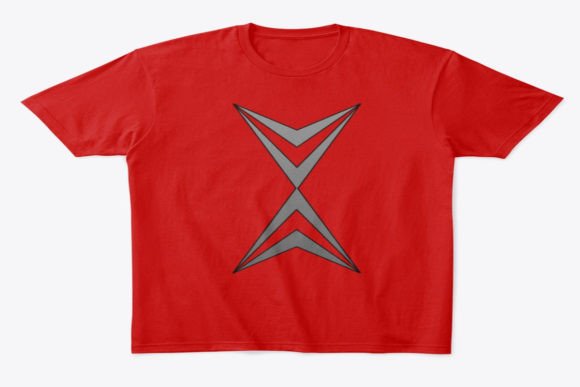
Second, it empowers customization. The editable vector formats mean that a business owner can adjust colors to match their brand palette, a teacher can add textual annotations for an educational resource, or a designer can integrate the motif into a larger composite illustration. This adaptability is central to the concept of Design Red and similar resources, where the design serves as a starting point rather than a finished, immutable product.
Third, it ensures longevity and future-proofing. As project requirements evolve—perhaps needing a much larger print or a different color scheme—the foundational vector files allow for those changes without starting from scratch.
Broad Spectrum of Practical Applications
The practical use cases for such a digital asset are extensive, touching both commercial and personal creative spheres.
- Print on Demand and Physical Products: The high-resolution files are engineered for this purpose. Users can easily upload the design to platforms that produce t-shirts, pillows, mugs, bags, and framed artwork. The DPI 300 ensures the print quality meets consumer expectations.
- Graphic Design and Branding: For professionals, the vector files are a boon. They can be dissected to create logo variations, incorporated into infographics, or used as recurring illustrative elements across a brand's collateral, from business cards to presentation slides.
- Crafting and Personal Projects: Hobbyists in scrapbooking, sticker making, or custom card creation benefit from the transparent PNG and ready-to-print JPG. They can print the design at home or through a local service for personalized gifts and decorations.
- Digital Media and Content Creation: Educators and content creators can use the asset in digital formats. It might serve as a visual in an online course, a graphic in a blog post, or an element in a video overlay, with the transparency allowing for clean integration.
The phrase "and much more" is apt; the utility is limited primarily by the user's imagination and the design's inherent aesthetic. A researcher might use it in a conference poster, a restaurateur on a menu, or an app developer as a UI icon base.
Considerations for Effective Use
While the advantages are clear, effective utilization depends on some user considerations. Understanding basic graphic software is necessary to edit the vector files; programs like Adobe Illustrator, Inkscape, or Affinity Designer are typical tools. Even without editing skills, the pre-made PNG and JPG are immediately usable.
Users should also be mindful of the intended use when selecting the file format. For instance, a design meant for a small web icon might not need the full 4687-pixel JPG, and a smaller derivative could be created from the vector source to optimize loading times. For physical printing, communicating the correct file and its specifications to the printer or POD service is crucial.
The Economic and Logistical Benefit of Digital Downloads
The model of an instant digital download, with no physical item shipped, presents distinct benefits. It provides immediate access, removing wait times and shipping costs. It allows for global distribution without logistical constraints. From an environmental standpoint, it reduces waste associated with packaging and transportation. For the seller, it enables the distribution of a single design asset to an unlimited number of users without recurring production costs. This efficiency is a cornerstone of the modern digital marketplace for creative resources.
Real-World Relevance for Diverse Audiences
The relevance of this type of product cuts across audience segments. For a business owner, it's a cost-effective way to procure high-quality artwork for merchandising without hiring a designer for each item. For a professional designer, it can be a time-saving base component for a client project. For an educator, it's a ready-made visual aid. For a hobbyist, it's an accessible entry point into customization and crafting.
This broad appeal is why the product description emphasizes suitability for both print on demand and digital use. It acknowledges that the same asset might be printed on a coffee mug by one user and embedded in a mobile app by another. The design's utility is not confined to a single medium or industry.
In observing trends, the demand for such flexible, high-quality digital assets is growing. As e-commerce and personal branding become more visual, and as tools for customization become more user-friendly, the value of a versatile design file increases. It represents a move away from static, single-use graphics towards dynamic, multipurpose visual tools.
Final Observations on Quality and Flexibility
The intersection of high resolution, multiple file formats, and an editable foundation creates a resource that is both a finished product and a raw material. The user is not merely receiving a picture; they are receiving a toolkit. They can use it as-is, adapt it, scale it, or decompose it. This duality is perhaps its most powerful characteristic.
When evaluating digital assets like this, the specifications listed—the pixel dimensions, the DPI, the formats included—are not just technical details; they are direct indicators of potential. They tell a story about what the file can do: how large it can be printed, how it can be edited, and where it can be used. In a marketplace filled with digital offerings, these details are the key to understanding real-world applicability. For anyone engaged in creative or commercial projects that require visual elements, mastering the use of such comprehensive digital downloads is a skill that enhances capability, reduces cost, and expands creative possibility.