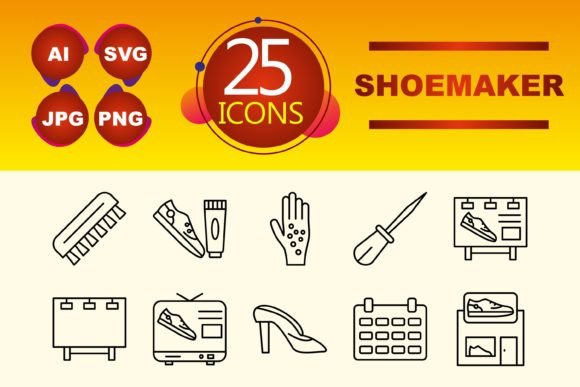
Understanding Icon Sets: The Shoemaker Collection for Modern Design
In the digital world, where clarity and visual communication are paramount, icon sets serve as a fundamental toolkit. They are the visual shorthand that guides users, enhances interfaces, and conveys function and meaning instantly. For designers, developers, and content creators, having access to a cohesive, high-quality collection of icons is not just a luxury—it's a necessity for efficient and effective work. This article explores one such resource, the Shoemaker icon set, and builds a foundational understanding of why purpose-built icon collections are so vital in today's digital landscape.
What Are Icon Sets and Why Do We Need Them?
Before diving into a specific set, it's helpful to grasp the broader concept. An icon set is a curated group of graphical symbols designed around a common style, theme, or purpose. Unlike randomly sourcing individual icons from different places, a set ensures visual consistency. This consistency is key to professional design. It creates a harmonious user experience where every element feels part of a unified system.
Think of icons as the punctuation and symbols of a visual language. Just as consistent font use makes text readable, consistent icon style makes an interface or presentation intuitively navigable. Their purpose spans from purely functional—like a trash bin icon for delete—to thematic, representing specific concepts or industries. Their significance lies in their ability to transcend textual language barriers and communicate quickly across cultures and user groups.
The Shoemaker Collection: A Focused Toolkit
The Shoemaker icon set is a prime example of a focused, thematic toolkit. As the name suggests, this collection revolves around icons relative to shoemaking, cobbling, footwear, and related crafts. This might seem niche at first glance, but its practical relevance is substantial for specific projects.
Imagine you are designing a mobile app for a custom shoe company, building a website for a footwear blog, or creating an infographic about the history of cobbling. Using generic icons for these contexts would lack specificity and brand alignment. The Shoemaker set provides tailored, relevant imagery—icons representing shoes, tools like awls or hammers, leather, stitches, and other related items—that immediately resonate with the topic. This direct relevance strengthens the message and engages the target audience more effectively.
Key Features and Formats of the Shoemaker Icons
Understanding the technical specifications of an icon set is crucial for its practical application. The Shoemaker collection is described as containing 10 icons in a Line Icon style. Let's unpack what this means.
Line Icons: This style refers to icons created primarily using lines and strokes, often with a clean, outline-based appearance. They are typically minimalist, lacking filled colors or complex shading. This makes them versatile, easy to scale, and perfect for modern, sleek design aesthetics common in mobile apps and user interfaces. They don't overpower a layout and integrate smoothly with text and other elements.
File Types Included: The availability of multiple file formats is a critical feature for any professional icon set. Each format serves a different purpose in the design and implementation workflow:
- AI (Adobe Illustrator): This is the native vector source file. It allows designers to edit, modify, or customize the icons without loss of quality. It's the foundation for true flexibility.
- SVG (Scalable Vector Graphics): A web-friendly vector format. SVGs are essential for modern web development as they scale perfectly to any screen size (responsive design) and remain crisp on high-resolution displays. They can also be styled with CSS.
- PNG (Portable Network Graphics): A raster format with transparency support. PNGs are useful for direct placement in presentations, certain app environments, or when a quick, non-editable image is needed.
- JPG (JPEG): A common raster format, though less ideal for icons due to its typical lack of transparency. Its inclusion might be for specific compatibility cases or quick previews.
This multi-format offering ensures the Shoemaker icons can move seamlessly from the initial design phase (AI) through to final implementation on a website (SVG) or within a mobile app asset package (PNG/SVG).
Practical Applications Across Digital Media
The description highlights that the set can be used in "mobile apps, websites templates, presentations, infographics or user interface design templates." This is not just a list; it's a roadmap of its practical relevance in modern life and work. Let's explore examples.
Enhancing User Interfaces and Apps
For a mobile app dedicated to shoe shopping or DIY shoe repair, these icons could serve as navigation elements (tab bar icons), feature indicators, or decorative elements within tutorials. Their line style ensures they remain clear on small screens. In user interface design templates for e-commerce platforms specializing in footwear, they provide ready-made, thematic assets that speed up the design process and ensure visual coherence.
Powering Websites and Presentations
A website for an artisan cobbler could use these icons in the services section (an icon of a tool next to "Repair Service"), as part of a custom logo, or as visual breaks in blog content about shoemaking techniques. In presentations for a business in the fashion or manufacturing sector, these icons can elevate slides by providing professional, topic-specific visuals that are more engaging than plain text.
Creating Clear Infographics
Infographics aim to explain data or processes visually. An infographic about the steps of handmade shoe production could use Shoemaker icons to represent each stage—cutting leather, stitching, polishing—making the information instantly graspable. This fits perfectly into contexts of education, business reporting, and creative storytelling.
Clarifying Common Assumptions About Icon Sets
When considering specialized sets like Shoemaker, some assumptions can arise. It's important to address these to build a broader understanding.
Assumption 1: "Niche sets are only for very specific projects." While they are ideal for matching topics, their utility can be broader. The line style of these icons might be extracted for its aesthetic value alone. A single icon, like a stylized hammer, could be repurposed in a different context representing "craftsmanship" or "building" in a more abstract way, provided the licensing allows.
Assumption 2: "10 icons is a small set, so it's limited." Quantity does not always equal value. A focused, high-quality set of 10 perfectly crafted icons can be more valuable than a sprawling collection of 100 inconsistent ones. For a targeted project, these 10 might cover all the necessary concepts without the bloat of unused assets, making the designer's workflow more efficient.
Assumption 3: "I only need one file format, usually PNG." This overlooks the future scalability and editing needs. Starting with vector source files (AI/SVG) is a best practice. It preserves quality for future redesigns, brand scaling, or adaptations for different platforms. Relying only on PNG can lock you into fixed sizes and resolutions, which is a problem in an era of diverse screen sizes.
Building a Broader Understanding of Digital Assets
The Shoemaker icon set is a microcosm of a larger ecosystem: the world of digital design assets. Understanding this particular set helps illuminate best practices for selecting and using any visual resource.
First, theme alignment is crucial. Assets should support and enhance your core message. Second, technical versatility (multiple file formats) is a sign of a professional, developer-friendly asset. Third, style consistency within the set ensures integration ease and a polished final product.
In modern life, where digital interfaces mediate so much of our work, education, shopping, and creativity, the quality of the visual tools we use directly impacts communication effectiveness. Whether you are a business owner building a website, a teacher creating an educational module, a developer prototyping an app, or a designer crafting a brand identity, thoughtful selection of resources like icon sets lays a foundation for success.
Conclusion: The Value of Purposeful Design Tools
The Shoemaker relative icon set, with its 10 line-style icons and provision of AI, JPG, PNG, and SVG files, exemplifies how specialized design tools fit into the broader digital workflow. It serves a clear thematic purpose, offers practical flexibility through its formats, and finds relevance across mobile apps, web design, presentations, and infographics. By starting with such focused, high-quality components, creators can build digital experiences that are not only functional but also visually coherent and deeply engaging for their intended audience. In the end, understanding and utilizing such assets is about empowering clearer, more effective visual communication in every digital space we inhabit.