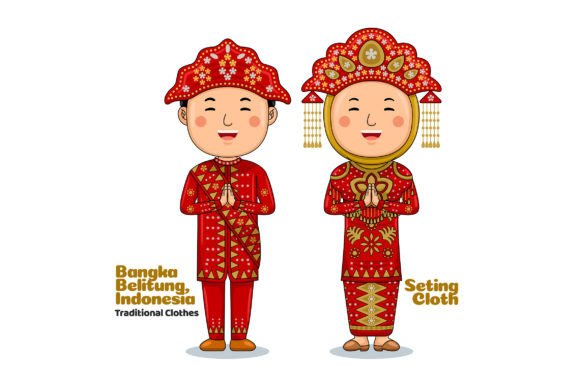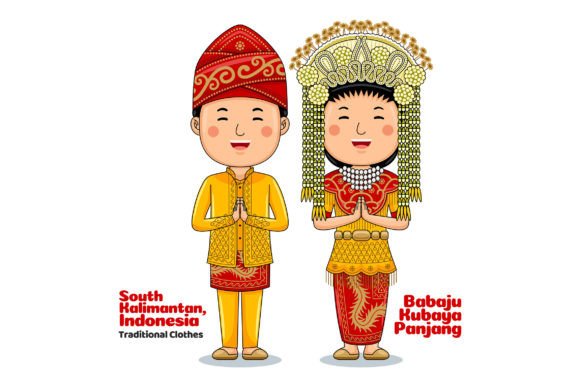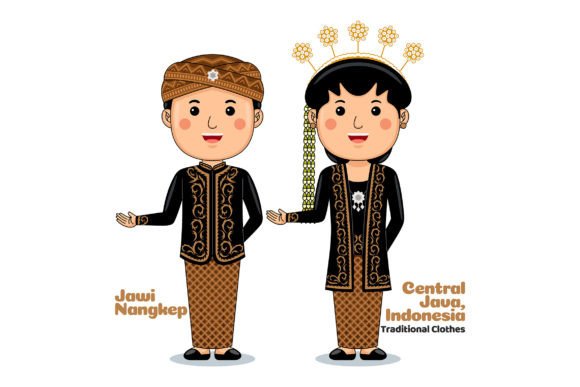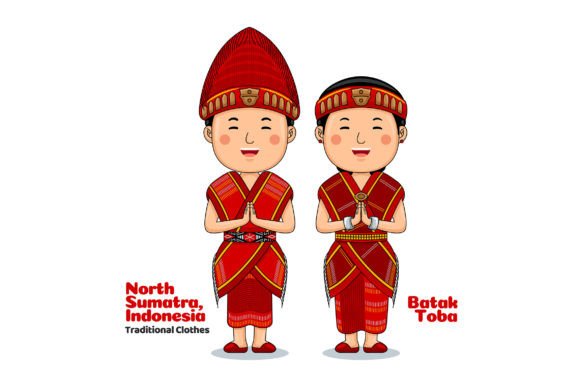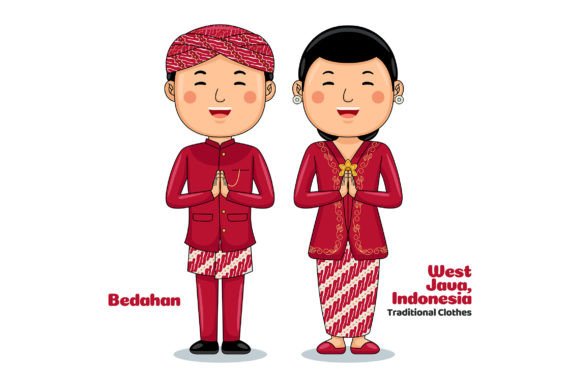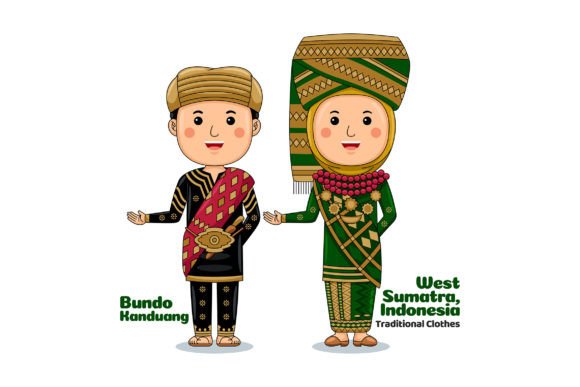
Understanding West Sumatra Ethnic Cloth Welcome 01 as a Design Resource
In the landscape of digital design assets, particularly those drawing on cultural heritage, specific collections offer unique advantages. West Sumatra Ethnic Cloth Welcome 01 represents a specialized bundle of vector illustrations inspired by the traditional textiles and motifs of the Minangkabau region in Indonesia. Its core value lies not just in aesthetic authenticity, but in providing a structured, editable foundation for professional design work.
What distinguishes West Sumatra Ethnic Cloth Welcome 01 from more generic ethnic or floral vector packs is its focused thematic cohesion. Every element—from intricate geometric patterns to symbolic representations woven into the iconic songket cloth—is derived from a singular cultural source. This creates a library where components are inherently harmonious, allowing designers to combine pieces without sacrificing stylistic integrity. The “Welcome 01” designation suggests a curated set, likely oriented towards applications requiring warmth, hospitality, and formal beauty, such as branding for cultural events, heritage-focused tourism, or elegant commercial presentations.
Core Capabilities and Practical Flexibility
The advertised specifications of the collection—100 vector illustrations in high resolution, EPS and JPG formats, and a flat design style—point to a resource built for utility. The flat design style is a significant choice; it strips away texture and shading to emphasize clean shapes and lines. This makes the motifs highly adaptable, easier to resize, and more compatible with diverse modern design trends, from minimalist websites to vibrant social media graphics.
A key feature often highlighted is the ability to create countless variations. This is enabled by the vector format. Unlike raster images (like standard JPGs), vector files (EPS) are mathematically defined, meaning every shape, line, and curve is an editable object. In software like Adobe Illustrator, a designer can change the color of every single element independently, resize the entire illustration without any loss of quality, or even deconstruct the artwork to use individual motifs in a new composition. This level of control is the primary tradeoff between using a pre-made cultural asset versus commissioning original artwork or attempting to create such detailed motifs from scratch.
Comparing Approaches to Cultural Design Elements
When a project requires culturally specific imagery, professionals typically weigh several paths. One option is to hire an illustrator or cultural expert to create custom work. This ensures deep authenticity and unique output but involves higher cost, longer timelines, and less immediate flexibility for iteration. Another common approach is to use stock photography or raster-based patterns of similar themes. These can be quicker and cheaper, but they often lack the resolution scalability and editorial control for large-scale applications like banners or detailed infographics.
West Sumatra Ethnic Cloth Welcome 01 sits between these poles. It offers pre-designed authenticity at a scalable, editable format. Its strength is efficiency and consistency. For a designer needing to produce a coordinated suite of materials—a website landing page, social media campaign, and promotional banners—having a unified library of 100 related elements can dramatically speed up the process. The limitation, inherent to any pre-made asset pack, is that the motifs are fixed. While their colors and combinations can be altered, the fundamental patterns themselves are not original creations. For projects demanding a completely novel interpretation of West Sumatran cloth, this collection would be a starting point, not the final solution.
Evaluation of Use Cases and Best-Fit Scenarios
The utility of such a vector collection depends heavily on the project’s goals and constraints. It excels in scenarios where visual consistency, cultural resonance, and production speed are prioritized.
Business Branding and Identity: For a business connected to Indonesian culture, such as a specialty restaurant, an artisalan product line, or a cultural tourism service, these vectors provide ready-made visual components for logos, icons, and decorative borders. The ability to change colors allows the assets to be tailored to exact brand palettes.
Digital and Print Promotions: Creating event posters, website banners, or email campaign graphics often requires large-format, high-resolution images. The 5000 x 5000 pixel size ensures crisp output even for large prints. The flat design style also translates cleanly across both digital and print media.
Informational Design: In infographics or educational materials explaining West Sumatran culture, the vector elements can be used as illustrative icons or background textures, making complex information more engaging and visually anchored to the topic.
However, for a purely artistic project or academic publication where each pattern must be documented with precise historical accuracy and context, the flat, simplified style of West Sumatra Ethnic Cloth Welcome 01 might lack the nuanced detail of actual textile photographs or scholarly drawings. Here, it would serve more as a complementary design enhancer rather than the primary source material.
Critical Decision Factors for Potential Users
Choosing whether this specific asset pack is the right resource involves considering a few practical factors.
- Software Compatibility: The collection’s compatibility with Adobe Illustrator is central. Users comfortable with vector editing software will unlock its full potential. Those without access to or skill with such tools might find the high-resolution JPGs useful, but miss the core benefit of infinite customization.
- Scope of Need: Does your project require 100 different motifs? For a small project, a smaller, less expensive pack might suffice. For ongoing, varied design needs across multiple campaigns, a larger library like this offers long-term value.
- Color and Style Requirements: The flat design style is a conscious aesthetic. If your project’s vision requires photorealistic textures, 3D effects, or a more rustic, hand-drawn feel, this collection’s style may not align, even though its motifs are culturally relevant.
An alternative path some designers consider is using free or open-source vector motifs inspired by global patterns. These can be cost-effective but often suffer from inconsistent quality, lack of thematic depth, or unclear licensing for commercial use. West Sumatra Ethnic Cloth Welcome 01, as a professional product, typically offers clear commercial licensing and a guaranteed level of design quality, which is a tradeoff for the upfront purchase cost.
When to Choose This Path and When to Look Elsewhere
West Sumatra Ethnic Cloth Welcome 01 is likely an appropriate choice when you have a confirmed design need anchored to Sumatran or Indonesian aesthetic themes, possess the technical means to edit vector files, and operate under timelines that benefit from a ready-made starting point. It reduces the initial research and drawing phase, allowing you to focus on composition, application, and brand integration.
You might need another option if your project requires:
- Absolute Artistic Originality: For a flagship logo or a unique art piece, custom illustration remains superior.
- A Different Cultural Focus: While the motifs are specific, if your project needs broader Indonesian or Southeast Asian elements, a more diversified collection might be better.
- Extremely Simple or Abstract Graphics: If your design ethos is ultra-minimalist, the intricate patterns might be too ornate, even in editable form.
- Non-Vector Editing Workflow: If your team exclusively uses raster-based software like Photoshop and cannot leverage the EPS files, the value proposition diminishes.
Ultimately, resources like West Sumatra Ethnic Cloth Welcome 01 serve as bridges. They connect the rich visual language of a culture to the practical demands of contemporary digital design. By understanding their capabilities—the easy resizing, the color flexibility, the potential to combine elements—you can assess whether they fit your specific bridge-building task. For many designers tackling professional projects with cultural dimensions, such a focused, high-quality vector pack can transform a complex challenge into a manageable, even inspiring, design process.