New Media Icons: Enhancing Digital Communication Across Platforms
The term New Media refers to the digital, interactive, and networked forms of communication that have become central to our daily lives. This encompasses websites, mobile applications, social platforms, streaming services, and any digital interface that facilitates user engagement. Unlike traditional media, New Media is characterized by its dynamic nature, requiring visual assets that are clear, adaptable, and instantly recognizable to users across diverse contexts.
The Visual Challenge in Digital Design
For designers, developers, and content creators, a primary challenge is establishing consistent visual communication. Whether you’re building a mobile app, crafting a website template, designing a presentation, or creating an infographic, you need a cohesive set of icons that convey function and intent without explanation. The goal is to reduce cognitive load for the user, guide them intuitively through an interface, and strengthen brand identity through repeated visual motifs. The need is for versatile, high-quality assets that integrate seamlessly into various projects without requiring constant customization or hunting for disparate resources.
How a Dedicated New Media Icon Set Addresses These Needs
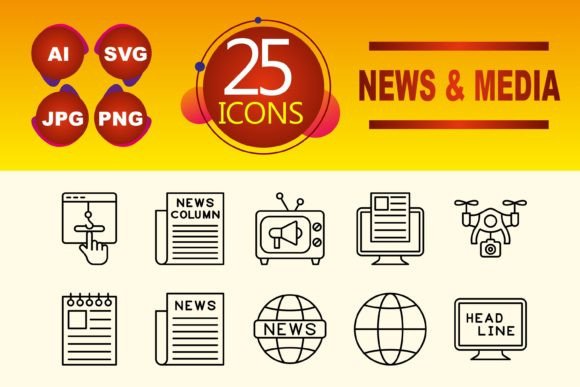
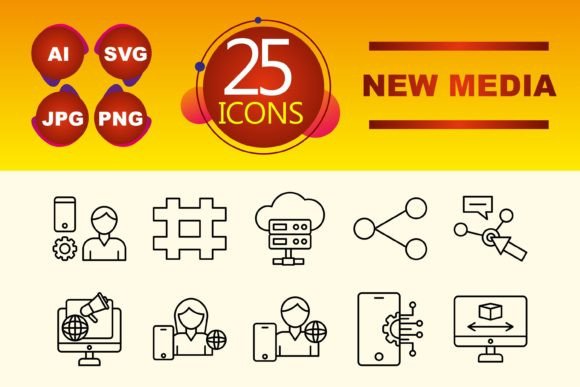
A curated collection of icons specifically themed around New Media concepts directly tackles these challenges. By providing a focused set of symbols representing core digital functions and themes—such as connectivity, streaming, sharing, uploading, or interactive elements—you create a foundational visual language. This set, covering essential New Media icons, acts as a toolkit. Having these assets readily available in multiple file formats (AI, JPG, PNG, SVG) means you can adapt them immediately to the technical requirements of your project, from vector-based design software to web development environments.
The use of a Line Icon style is particularly beneficial. Line icons offer a clean, modern, and minimalist aesthetic that aligns perfectly with contemporary digital design trends. Their simplicity ensures they remain legible at various sizes, from tiny mobile app buttons to larger graphical elements in presentations, and they don’t compete with other visual content. This style supports scalability and readability, key outcomes for any successful implementation.
Practical Applications and Outcomes
Integrating a cohesive New Media icon set translates directly into practical improvements across your projects.
- Mobile App Development: Utilize the icons for navigation menus, feature indicators, and action buttons. The SVG format ensures crisp rendering on any screen resolution, improving the user experience.
- Website Templates & UI Design: Implement the icons to visually denote sections like social media feeds, media galleries, contact forms, or download areas. Consistent icons across a site template enhance usability and professional appearance.
- Presentations & Infographics: Use the PNG or JPG files to quickly insert clear visual metaphors for digital concepts into slides or data visualizations, making complex New Media topics more accessible to audiences.
- Brand Consistency: By applying the same set of line-style icons across different marketing materials and platforms, you reinforce a unified brand identity associated with digital innovation and clarity.
The outcome is a more efficient design process, a more intuitive end-user experience, and a stronger, more coherent visual narrative for any project dealing with digital communication.
Tailoring Use to Different User Roles
The approach to using a New Media icon set varies depending on your primary role and objectives.
For a UI/UX Designer, the focus is on integration and user flow. The SVG and AI files are paramount, allowing for infinite scaling and editing within design software to perfectly match the interface’s color scheme and layout. The designer assesses how each icon’s metaphor aligns with intended user actions.
A Web Developer might prioritize the SVG format for its native compatibility with web code, enabling easy implementation with CSS styling for color changes or animations. Performance and load times are considerations, and SVG’s vector nature often provides an advantage.
Content Creators or Marketers preparing presentations or infographics may lean towards the ready-to-use PNG or JPG files. Their need is for speed and visual impact; dropping these pre-made icons into their work saves considerable time while maintaining a professional look that supports their message about digital trends.
Finally, a Project Manager overseeing a digital product might see the value in the entire package as a resource that standardizes visuals across different teams (design, development, marketing), reducing friction and ensuring everyone is "speaking" the same visual language.
Recommendations and Key Considerations
When implementing any icon set, including this New Media collection, consider these points for maximum effectiveness:
- Context is Key: Ensure the icon’s meaning is clear within its specific placement. A "share" icon is universal, but test that its line-art representation is understood by your target audience.
- Format Flexibility: Leverage the multiple file types provided. Use AI files for deep customization, SVG for web and scalable needs, and raster formats (PNG, JPG) for static graphics where editing isn’t required.
- Style Consistency: Stick to the line icon style throughout a single project to avoid visual dissonance. Introducing a different style (e.g., filled icons) can disrupt the user's visual rhythm.
- Accessibility: Remember that icons enhance, but should not replace, clear text labels where necessary, especially for critical functions, to support users with varying abilities.
In essence, this set of ten New Media icons in a clean line style is more than just graphics; it’s a strategic resource. It empowers you to visually articulate the concepts of our connected world efficiently, fostering better design, clearer communication, and more engaging digital experiences for every user. By adopting a unified visual toolkit, you invest in the clarity and coherence that defines successful New Media interactions.